CVC - New Seller Experience
One of the largest tourism operators in Latin America faced a structural challenge in the sales operations carried out by its partner agents. The sales journey depended on multiple, poorly integrated legacy systems, which led to rework, loss of information, and low sales productivity.
In this project, I acted as the Product Designer responsible for conducting the research on the current experience, structuring the new journey, and leading the design of the solution alongside the product and technology teams. The goal was to simplify sales operations, increase agent efficiency, and create a scalable foundation for the future evolution of the platform.
Customer
CVC Viagens
CVC Viagens
Services
UX/UI Design
Discovery

Overview
Problem definition:
The sales journey was fragmented, with stages distributed among three distinct systems that did not communicate with each other. This created rework, operational confusion, and the loss of critical data during the sales process. On average, salespeople had to switch between different platforms to complete a single sale, which significantly increased service time and reduced commercial efficiency, in addition to contributing to a poor experience for consumers served during the purchasing process, which was slow and bureaucratic. In addition to the technical problem, there was an important cultural challenge: salespeople had gone through previous attempts at system redesign that were not well accepted, generating distrust and resistance to the adoption of new tools. The challenge of the project, therefore, was not only to redesign the digital experience, but also to rebuild users' trust in the company's technology.
Objectives:
Deeply understand the main friction points in the current sales journey and identify opportunities for operational simplification.
Consolidate workflows distributed across multiple systems into a unified and intuitive experience.
Reduce the time required to complete a sale and decrease rework caused by inconsistencies between systems.
Validate navigation hypotheses and information structure through testing with real users.
Create a reliable and predictable experience that would encourage sellers to adopt the new platform.
Hands-on
With the problem well defined, I began the solution exploration phase by structuring the work into iterative cycles of understanding, definition, ideation, prototyping, and validation with users.
The goal was to ensure that each design decision was grounded in evidence from real use and aligned with both the sellers' needs and the company's strategic objectives.
Understand:
I immersed myself in the salespeople's routine through in-person visits to franchised stores and in-depth interviews with agents of different experience levels. During the interviews, I sought to understand not only the operational flows, but also the shortcuts and workarounds created by the salespeople themselves to deal with the limitations of existing systems. This investigation revealed recurring patterns of friction, such as duplicate data entry, difficulty resuming ongoing opportunities, and a lack of visibility into the history of customer interactions. These insights were key to guiding the architecture decisions for the new experience.
Define:
After gathering information, the next step was the benchmark. In this step, we analyzed legacy systems and similar solutions from other players in the market. The goal is to:
Identify best practices
Evaluate how other platforms meet their users' needs and which features are most effective.
Market Gaps:
Discover areas that are not being well served by competitors and that may represent opportunities for innovation.
Other benchmarks
After consolidating the main research insights, I conducted a comparative analysis between the existing internal systems and platforms used by other players in the tourism and consultative sales sector. The goal was to identify consolidated market patterns, opportunities to simplify the journey, and potential gaps that could differentiate the new solution. This step also helped align expectations with internal stakeholders regarding what would represent a competitive experience within the market context.
Devise:
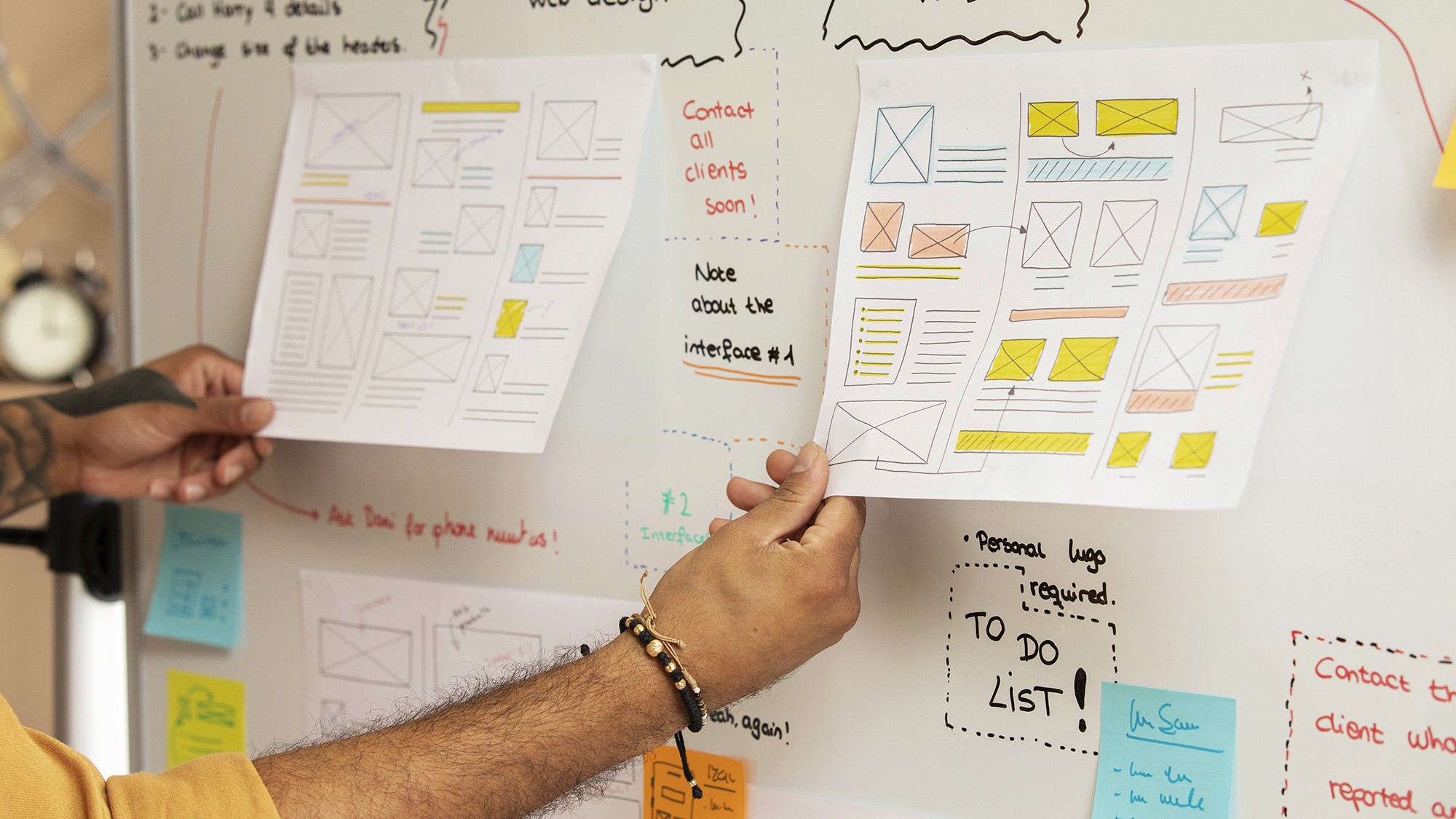
I facilitated co-creation sessions with product, technology, and business stakeholder teams to explore different solution paths. We used user flows, low-fidelity sketching, and prioritization exercises based on user impact and technical feasibility. The ideas were organized into incremental releases, allowing us to validate hypotheses quickly and reduce implementation risks. Another approach we used was mapping the salesperson persona to dive even deeper into their pain points and build stakeholder engagement with our primary user.
User Persona
Name
Carlos Silva
Age
38
Experience
10 years
Occupation
Seller
Where they live
São Paulo - SP
Family
Wife and a son
Bio
Carlos is an experienced salesperson who works at a well-established tourism agency. He is passionate about helping people find the best travel experiences, but is constantly looking for ways to increase his commissions and improve his performance. He is proactive, charismatic, and uses his network of contacts to generate leads.
Fears and pains
Fears:
Fear of losing clients to competitors offering lower prices.
Anxiety regarding the instability of the tourism market, especially during crises.
Skeptical about adopting new technologies due to previous bad experiences with updates that interrupted workflows.
Anxious to improve personal sales numbers, but feels limited by existing processes and tools.
Pains:
Frustration with the lack of adequate tools to manage leads and sales.
Concern about the difficulty in staying updated with industry trends and customer preferences.
Frustrated with recurring software bugs in current systems, leading to wasted time and effort. Believes that if change is necessary, it must be carefully planned to avoid disruptions in daily tasks.
Objectives
Personal goals:
Increase family income and ensure a stable future for her son.
Travel with her family annually to strengthen bonds and create memories.
Professional goals:
Achieve a 20% increase in commissions over the next 12 months.
Develop a loyal customer base that trusts her recommendations and returns for new purchases.
Empathy Map
Walks the talk
Public attitude:
Carlos is friendly and approachable, always willing to chat and share travel recommendations.
Appearance:
He dresses professionally yet casually, opting for clothes that convey confidence and comfort.
Behavior towards others:
He is collaborative with the team, but also competitive. He often shares tips and successes, but has an instinct to stand out.
Thinks and feels
Main concerns:
Increasing sales to ensure a higher income and provide a comfortable lifestyle for their family.
Growing competition in the sector, especially from online platforms.
Fear of not meeting sales targets and the financial consequences this may bring.
The constant pressure to stay updated on new destinations and packages.
Aspirations:
To become the most recognized salesperson in the agency and eventually assume a leadership position.
To offer memorable travel experiences that delight their clients.
Prototype:
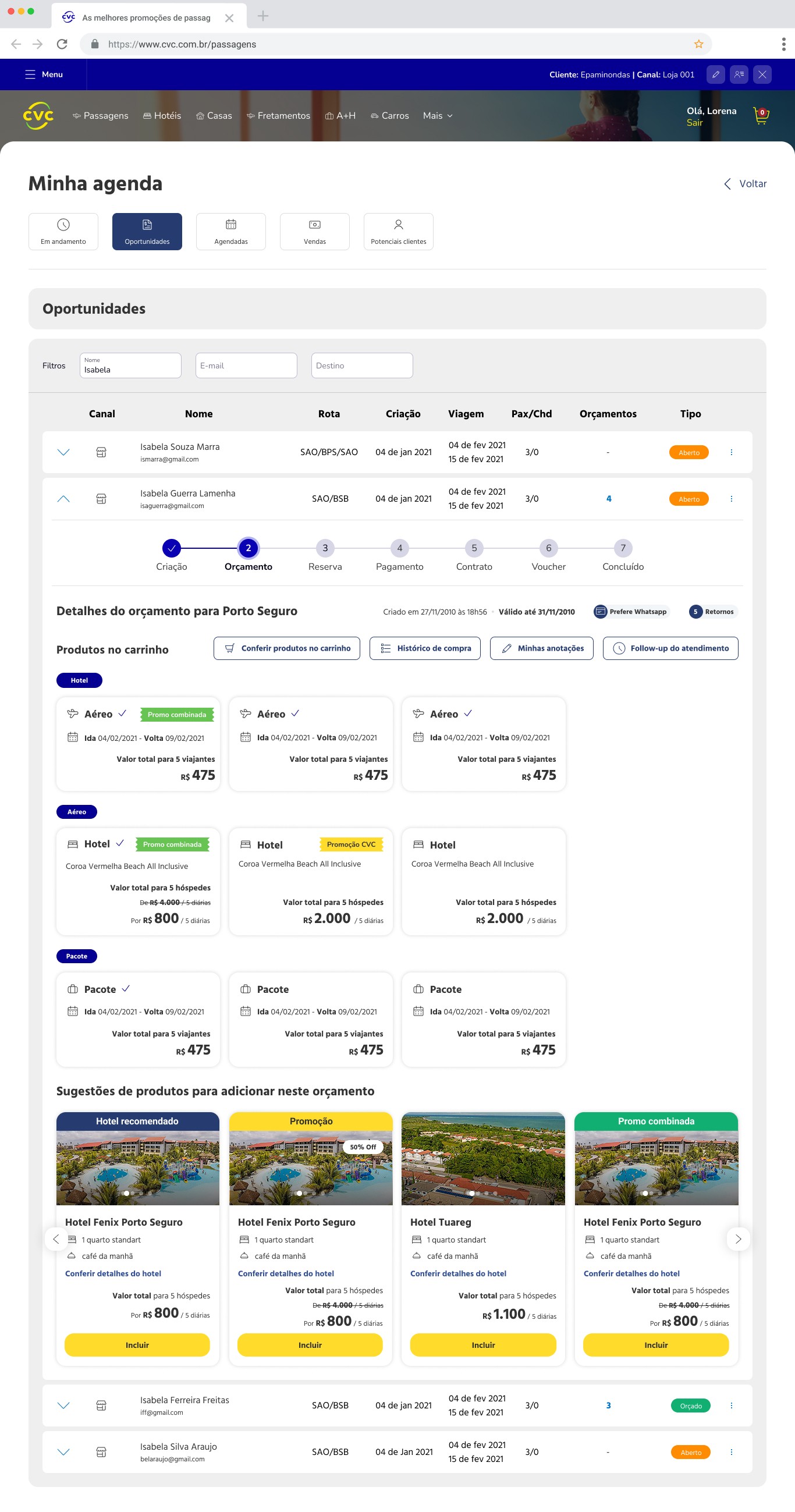
I developed navigable prototypes in Figma representing complete sales flows. The visual design was aligned with the company's design system, ensuring consistency with other products in the digital ecosystem. During this process, I also identified opportunities to standardize components and interactions, contributing to the evolution of the design system and facilitating implementation by the engineering and OPS teams.
Test:
I conducted moderated tests via Microsoft Teams, using a link to the prototype developed in Figma. The goal was to evaluate the usability of the new travel package sales platform, focusing on the sales representatives' experience. The target audience consisted of 13 experienced tourism sales representatives, aged between 20 and 50, who shared similar profiles to the Carlos Silva persona.
Task Roadmap
Participants were asked to complete a series of specific tasks to simulate using the platform: Find a sales opportunity: Navigate through the system to identify potential leads. Contact a lead: Use the platform to send a message or start a conversation. View the details of a trip booking: Access information about a specific package and its details. Finalize the sale: Complete the sales process and verify that the confirmation was successful.
Conducting the Tests
I conducted in-person testing sessions with 13 travel agents, using the think-aloud method and structured task scripts. We evaluated usability, navigation flow, and perceived reliability. The feedback was overwhelmingly positive: the agents described the solution as "familiar, yet much more efficient." Supported by the SUS tool, the new experience achieved a usability score of 82.5, signaling strong adoption and maturity of the proposal.
Examples of Positive Quotes
Participants expressed positive feedback during testing, orally validating the proposal. Here are some examples of quotes that were said:
"The navigation is simple, I can find everything quickly."
"I loved how easy it is to find and resume an opportunity. The data also makes it easier because I no longer need to look for the client's contact in another system."
"The booking details are very well organized, it's easy to verify the information I need."
"Finalizing the sale was very simple; it feels like the system did everything on its own."
Hands-on
With the problem well defined, I began the solution exploration phase by structuring the work into iterative cycles of understanding, definition, ideation, prototyping, and validation with users.
The goal was to ensure that each design decision was grounded in evidence from real use and aligned with both the sellers' needs and the company's strategic objectives.
Understand:
I immersed myself in the salespeople's routine through in-person visits to franchised stores and in-depth interviews with agents of different experience levels. During the interviews, I sought to understand not only the operational flows, but also the shortcuts and workarounds created by the salespeople themselves to deal with the limitations of existing systems. This investigation revealed recurring patterns of friction, such as duplicate data entry, difficulty resuming ongoing opportunities, and a lack of visibility into the history of customer interactions. These insights were key to guiding the architecture decisions for the new experience.
Define:
After gathering information, the next step was the benchmark. In this step, we analyzed legacy systems and similar solutions from other players in the market. The goal is to:
Identify best practices
Evaluate how other platforms meet their users' needs and which features are most effective.
Market Gaps:
Discover areas that are not being well served by competitors and that may represent opportunities for innovation.
Other benchmarks
After consolidating the main research insights, I conducted a comparative analysis between the existing internal systems and platforms used by other players in the tourism and consultative sales sector. The goal was to identify consolidated market patterns, opportunities to simplify the journey, and potential gaps that could differentiate the new solution. This step also helped align expectations with internal stakeholders regarding what would represent a competitive experience within the market context.
Devise:
I facilitated co-creation sessions with product, technology, and business stakeholder teams to explore different solution paths. We used user flows, low-fidelity sketching, and prioritization exercises based on user impact and technical feasibility. The ideas were organized into incremental releases, allowing us to validate hypotheses quickly and reduce implementation risks. Another approach we used was mapping the salesperson persona to dive even deeper into their pain points and build stakeholder engagement with our primary user.
User Persona
Name
Carlos Silva
Age
38
Experience
10 years
Occupation
Seller
Where they live
São Paulo - SP
Family
Wife and a son
Bio
Carlos is an experienced salesperson who works at a well-established tourism agency. He is passionate about helping people find the best travel experiences, but is constantly looking for ways to increase his commissions and improve his performance. He is proactive, charismatic, and uses his network of contacts to generate leads.
Fears and pains
Fears:
Fear of losing clients to competitors offering lower prices.
Anxiety regarding the instability of the tourism market, especially during crises.
Skeptical about adopting new technologies due to previous bad experiences with updates that interrupted workflows.
Anxious to improve personal sales numbers, but feels limited by existing processes and tools.
Pains:
Frustration with the lack of adequate tools to manage leads and sales.
Concern about the difficulty in staying updated with industry trends and customer preferences.
Frustrated with recurring software bugs in current systems, leading to wasted time and effort. Believes that if change is necessary, it must be carefully planned to avoid disruptions in daily tasks.
Objectives
Personal goals:
Increase family income and ensure a stable future for her son.
Travel with her family annually to strengthen bonds and create memories.
Professional goals:
Achieve a 20% increase in commissions over the next 12 months.
Develop a loyal customer base that trusts her recommendations and returns for new purchases.
Empathy Map
Walks the talk
Public attitude:
Carlos is friendly and approachable, always willing to chat and share travel recommendations.
Appearance:
He dresses professionally yet casually, opting for clothes that convey confidence and comfort.
Behavior towards others:
He is collaborative with the team, but also competitive. He often shares tips and successes, but has an instinct to stand out.
Thinks and feels
Main concerns:
Increasing sales to ensure a higher income and provide a comfortable lifestyle for their family.
Growing competition in the sector, especially from online platforms.
Fear of not meeting sales targets and the financial consequences this may bring.
The constant pressure to stay updated on new destinations and packages.
Aspirations:
To become the most recognized salesperson in the agency and eventually assume a leadership position.
To offer memorable travel experiences that delight their clients.
Prototype:
I developed navigable prototypes in Figma representing complete sales flows. The visual design was aligned with the company's design system, ensuring consistency with other products in the digital ecosystem. During this process, I also identified opportunities to standardize components and interactions, contributing to the evolution of the design system and facilitating implementation by the engineering and OPS teams.
Test:
I conducted moderated tests via Microsoft Teams, using a link to the prototype developed in Figma. The goal was to evaluate the usability of the new travel package sales platform, focusing on the sales representatives' experience. The target audience consisted of 13 experienced tourism sales representatives, aged between 20 and 50, who shared similar profiles to the Carlos Silva persona.
Task Roadmap
Participants were asked to complete a series of specific tasks to simulate using the platform: Find a sales opportunity: Navigate through the system to identify potential leads. Contact a lead: Use the platform to send a message or start a conversation. View the details of a trip booking: Access information about a specific package and its details. Finalize the sale: Complete the sales process and verify that the confirmation was successful.
Conducting the Tests
I conducted in-person testing sessions with 13 travel agents, using the think-aloud method and structured task scripts. We evaluated usability, navigation flow, and perceived reliability. The feedback was overwhelmingly positive: the agents described the solution as "familiar, yet much more efficient." Supported by the SUS tool, the new experience achieved a usability score of 82.5, signaling strong adoption and maturity of the proposal.
Examples of Positive Quotes
Participants expressed positive feedback during testing, orally validating the proposal. Here are some examples of quotes that were said:
"The navigation is simple, I can find everything quickly."
"I loved how easy it is to find and resume an opportunity. The data also makes it easier because I no longer need to look for the client's contact in another system."
"The booking details are very well organized, it's easy to verify the information I need."
"Finalizing the sale was very simple; it feels like the system did everything on its own."
Hands-on
With the problem well defined, I began the solution exploration phase by structuring the work into iterative cycles of understanding, definition, ideation, prototyping, and validation with users.
The goal was to ensure that each design decision was grounded in evidence from real use and aligned with both the sellers' needs and the company's strategic objectives.
Understand:
I immersed myself in the salespeople's routine through in-person visits to franchised stores and in-depth interviews with agents of different experience levels. During the interviews, I sought to understand not only the operational flows, but also the shortcuts and workarounds created by the salespeople themselves to deal with the limitations of existing systems. This investigation revealed recurring patterns of friction, such as duplicate data entry, difficulty resuming ongoing opportunities, and a lack of visibility into the history of customer interactions. These insights were key to guiding the architecture decisions for the new experience.
Define:
After gathering information, the next step was the benchmark. In this step, we analyzed legacy systems and similar solutions from other players in the market. The goal is to:
Identify best practices
Evaluate how other platforms meet their users' needs and which features are most effective.
Market Gaps:
Discover areas that are not being well served by competitors and that may represent opportunities for innovation.
Other benchmarks
After consolidating the main research insights, I conducted a comparative analysis between the existing internal systems and platforms used by other players in the tourism and consultative sales sector. The goal was to identify consolidated market patterns, opportunities to simplify the journey, and potential gaps that could differentiate the new solution. This step also helped align expectations with internal stakeholders regarding what would represent a competitive experience within the market context.
Devise:
I facilitated co-creation sessions with product, technology, and business stakeholder teams to explore different solution paths. We used user flows, low-fidelity sketching, and prioritization exercises based on user impact and technical feasibility. The ideas were organized into incremental releases, allowing us to validate hypotheses quickly and reduce implementation risks. Another approach we used was mapping the salesperson persona to dive even deeper into their pain points and build stakeholder engagement with our primary user.
User Persona
Name
Carlos Silva
Age
38
Experience
10 years
Occupation
Seller
Where they live
São Paulo - SP
Family
Wife and a son
Bio
Carlos is an experienced salesperson who works at a well-established tourism agency. He is passionate about helping people find the best travel experiences, but is constantly looking for ways to increase his commissions and improve his performance. He is proactive, charismatic, and uses his network of contacts to generate leads.
Fears and pains
Fears:
Fear of losing clients to competitors offering lower prices.
Anxiety regarding the instability of the tourism market, especially during crises.
Skeptical about adopting new technologies due to previous bad experiences with updates that interrupted workflows.
Anxious to improve personal sales numbers, but feels limited by existing processes and tools.
Pains:
Frustration with the lack of adequate tools to manage leads and sales.
Concern about the difficulty in staying updated with industry trends and customer preferences.
Frustrated with recurring software bugs in current systems, leading to wasted time and effort. Believes that if change is necessary, it must be carefully planned to avoid disruptions in daily tasks.
Objectives
Personal goals:
Increase family income and ensure a stable future for her son.
Travel with her family annually to strengthen bonds and create memories.
Professional goals:
Achieve a 20% increase in commissions over the next 12 months.
Develop a loyal customer base that trusts her recommendations and returns for new purchases.
Empathy Map
Walks the talk
Public attitude:
Carlos is friendly and approachable, always willing to chat and share travel recommendations.
Appearance:
He dresses professionally yet casually, opting for clothes that convey confidence and comfort.
Behavior towards others:
He is collaborative with the team, but also competitive. He often shares tips and successes, but has an instinct to stand out.
Thinks and feels
Main concerns:
Increasing sales to ensure a higher income and provide a comfortable lifestyle for their family.
Growing competition in the sector, especially from online platforms.
Fear of not meeting sales targets and the financial consequences this may bring.
The constant pressure to stay updated on new destinations and packages.
Aspirations:
To become the most recognized salesperson in the agency and eventually assume a leadership position.
To offer memorable travel experiences that delight their clients.
Prototype:
I developed navigable prototypes in Figma representing complete sales flows. The visual design was aligned with the company's design system, ensuring consistency with other products in the digital ecosystem. During this process, I also identified opportunities to standardize components and interactions, contributing to the evolution of the design system and facilitating implementation by the engineering and OPS teams.
Test:
I conducted moderated tests via Microsoft Teams, using a link to the prototype developed in Figma. The goal was to evaluate the usability of the new travel package sales platform, focusing on the sales representatives' experience. The target audience consisted of 13 experienced tourism sales representatives, aged between 20 and 50, who shared similar profiles to the Carlos Silva persona.
Task Roadmap
Participants were asked to complete a series of specific tasks to simulate using the platform: Find a sales opportunity: Navigate through the system to identify potential leads. Contact a lead: Use the platform to send a message or start a conversation. View the details of a trip booking: Access information about a specific package and its details. Finalize the sale: Complete the sales process and verify that the confirmation was successful.
Conducting the Tests
I conducted in-person testing sessions with 13 travel agents, using the think-aloud method and structured task scripts. We evaluated usability, navigation flow, and perceived reliability. The feedback was overwhelmingly positive: the agents described the solution as "familiar, yet much more efficient." Supported by the SUS tool, the new experience achieved a usability score of 82.5, signaling strong adoption and maturity of the proposal.
Examples of Positive Quotes
Participants expressed positive feedback during testing, orally validating the proposal. Here are some examples of quotes that were said:
"The navigation is simple, I can find everything quickly."
"I loved how easy it is to find and resume an opportunity. The data also makes it easier because I no longer need to look for the client's contact in another system."
"The booking details are very well organized, it's easy to verify the information I need."
"Finalizing the sale was very simple; it feels like the system did everything on its own."
SUS questionnaire results
Tests confirmed that the new experience significantly reduced the operational complexity of the sales process and increased sellers' trust in the platform.
In addition to usability gains, the project established a new structural foundation for the evolution of the company's sales platform. The consolidation of flows and interface standards also facilitated future product evolutions and reduced dependencies among legacy systems.
Observations and metrics:
87%
of users successfully completed the tasks, considering both direct and indirect successes.
43%
reduction in the average time to complete the booking process, from the start of service to checkout, compared to previous flows (merging the tools), allowing the salesperson to serve more customers per day.
92%
of the participants reported that navigating the platform was intuitive and easy, indicating a high level of usability.
83%
of the sellers stated that they would use the new platform regularly, highlighting their willingness to adopt the tool in their daily work routines.
85%
of the participants expressed overall satisfaction with the interface, finding it visually appealing and functional.
15%
Only 15% of users reported difficulties at some stage of the process, with most of these difficulties occurring when viewing booking details.
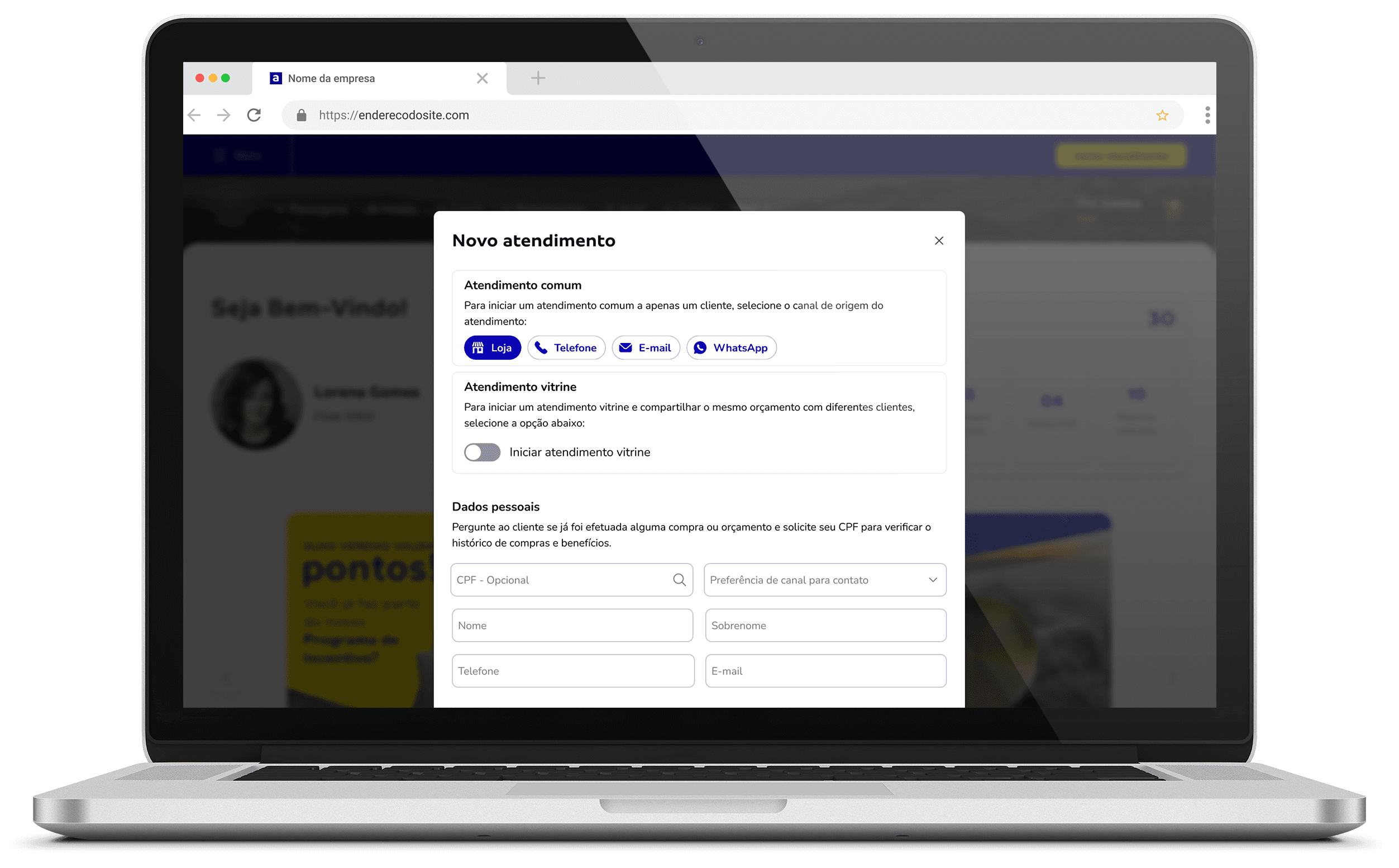
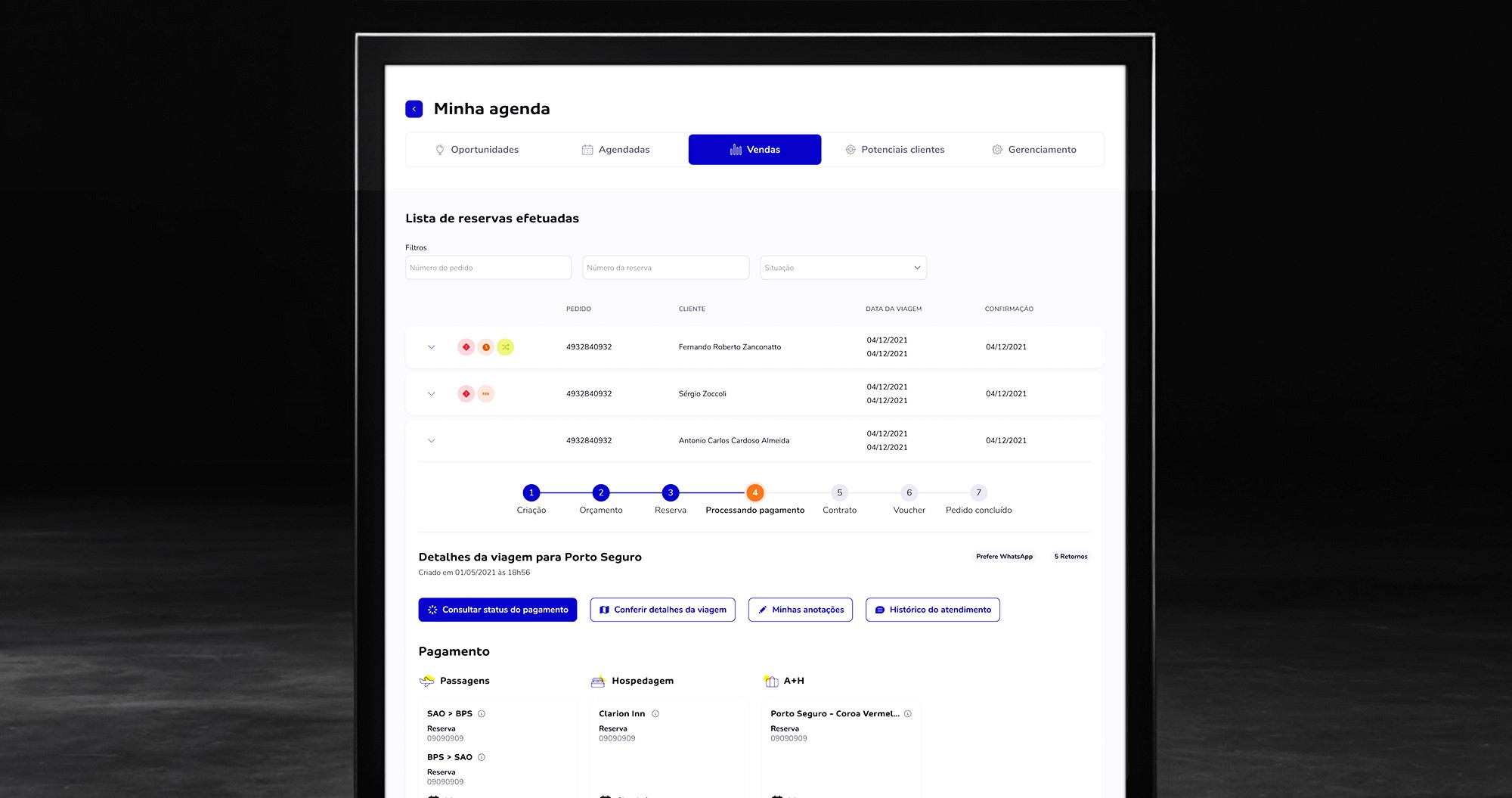
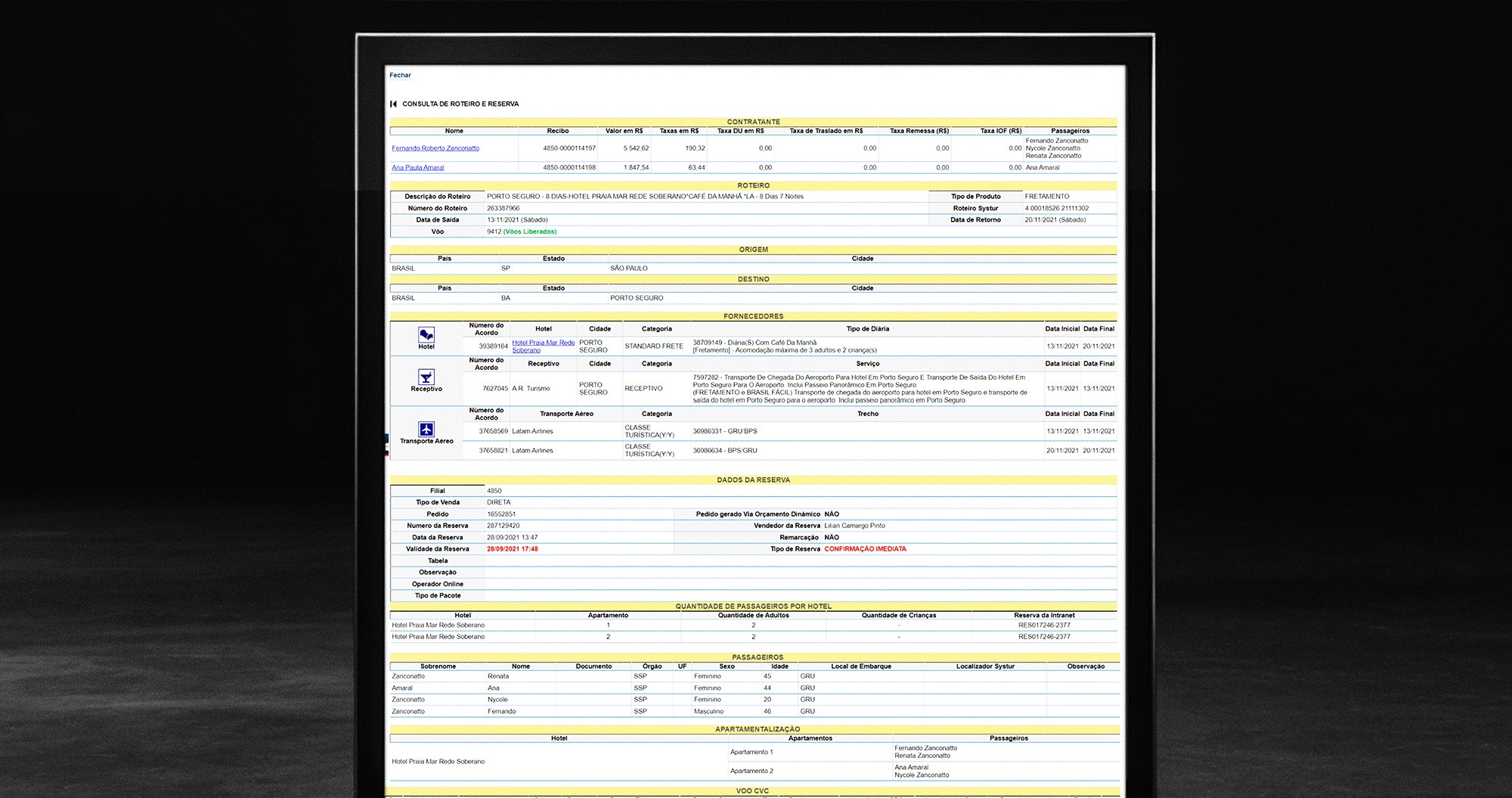
Solution redesign - Final version
The final version of the redesign consolidates the learnings from the entire process, translating insights and validations into a more fluid, consistent, and context-oriented experience for the seller. The screens reflect a simplified journey, with reduced friction, better information organization, and greater predictability in actions, allowing for more confidence and efficiency in conducting the sale.
In addition to the experience gains, the solution was structured based on scalable standards and aligned with the design system, ensuring consistency in handoff and implementation. This enabled a more efficient delivery for engineering and established a solid foundation for the continuous evolution of the platform.
Click on the card to browse the screens >
Before and after
Conclusion
This project was one of the most comprehensive experiences of my career as a Product Designer. It reinforced the importance of balancing business needs, technological limitations, and real user expectations.
More than just delivering a new system, we built a more efficient and reliable experience for sales representatives, demonstrating how well-founded design decisions can directly impact productivity and platform adoption.
SUS questionnaire results
Tests confirmed that the new experience significantly reduced the operational complexity of the sales process and increased sellers' trust in the platform.
In addition to usability gains, the project established a new structural foundation for the evolution of the company's sales platform. The consolidation of flows and interface standards also facilitated future product evolutions and reduced dependencies among legacy systems.
Observations and metrics:
87%
of users successfully completed the tasks, considering both direct and indirect successes.
43%
reduction in the average time to complete the booking process, from the start of service to checkout, compared to previous flows (merging the tools), allowing the salesperson to serve more customers per day.
92%
of the participants reported that navigating the platform was intuitive and easy, indicating a high level of usability.
83%
of the sellers stated that they would use the new platform regularly, highlighting their willingness to adopt the tool in their daily work routines.
85%
of the participants expressed overall satisfaction with the interface, finding it visually appealing and functional.
15%
Only 15% of users reported difficulties at some stage of the process, with most of these difficulties occurring when viewing booking details.
Solution redesign - Final version
The final version of the redesign consolidates the learnings from the entire process, translating insights and validations into a more fluid, consistent, and context-oriented experience for the seller. The screens reflect a simplified journey, with reduced friction, better information organization, and greater predictability in actions, allowing for more confidence and efficiency in conducting the sale.
In addition to the experience gains, the solution was structured based on scalable standards and aligned with the design system, ensuring consistency in handoff and implementation. This enabled a more efficient delivery for engineering and established a solid foundation for the continuous evolution of the platform.
Click on the card to browse the screens >
Before and after
Conclusion
This project was one of the most comprehensive experiences of my career as a Product Designer. It reinforced the importance of balancing business needs, technological limitations, and real user expectations.
More than just delivering a new system, we built a more efficient and reliable experience for sales representatives, demonstrating how well-founded design decisions can directly impact productivity and platform adoption.